
Berlin’s mineral dilemma: China’s rare earth leverage rattles German industry
German traders scramble to secure rare earth supplies as China’s export restrictions leave manufacturers paying premium prices or risking production shutdowns- ‘At the moment, we can only get around 10% of what we need,’ says Matthias Rueth, managing director of Frankfurt-based metals trading firm Tradium- Recycling rare earths in Europe remains costly and complex, with experts warning that the EU’s 2030 targets will be difficult to achieve without massive investment- Policy expert Tobias Gehrke says China
By Ayhan Simsek
BERLIN (AA) – Germany’s heavy dependence on China for critical minerals is raising alarm among both policymakers and industries as recent export restrictions have laid bare the country's vulnerability.
China’s limitations on rare earth exports – following tensions with the US last year – made some products extremely difficult to obtain, driving up prices and forcing some German manufacturers to halt production.
Matthias Rueth, the managing director of Frankfurt-based metals trading firm Tradium, said the situation is “critical” as his company faces severe supply challenges in meeting the demand from industrial customers.
“At the moment, we can only get around 10% of what we need from abroad,” he told Anadolu, adding that supply shortages are creating severe uncertainty for German industrial firms amid wild price fluctuations.
“Under such difficult conditions, industry is willing to pay high prices because it’s better than running out of stock and being forced to stop production,” he said, but stressed that this is not sustainable over the long term.
Germany, Europe’s largest economy, sources 65% of its rare earth elements from China, which holds a near-monopoly on the global market. German manufacturers obtain close to 90% of their permanent magnets – essential components for wind turbines, electric vehicles, robotics, medical equipment and defense systems – from China.
With fresh supplies scarce, Tradium has begun contacting private customers who previously bought and stored rare earths in its Frankfurt bunker, offering to buy the material back for immediate delivery to industry.
“That’s the solution helping us right now, but it’s certainly not a solution to the whole problem,” Rueth said.
- Immediate solutions remain distant
For months, German politicians have been working with their European counterparts to develop plans for reducing dependence on China for critical minerals.
Alternatives under consideration include diversifying imports through new strategic partnerships, developing extraction and processing opportunities within Europe, building strategic reserves, and expanding recycling options.
According to Rueth, who has been in the business for more than 25 years, all these options would require lengthy political processes and significant investments, and entail substantial operational costs. While beneficial in the long term, they would not offer sustainable solutions in the short term.
“Personally, I don’t see a solution in the near future. In the long run, we might develop recycling capacity or new production – there are certainly possibilities – but not anytime soon,” he said.
The “best option for a fast solution” is finding a way through diplomatic talks with China, he added.
Rueth recommended that German industrial firms build up strategic stockpiles of rare earth materials. This would provide flexibility and prevent production shutdowns, he said.
- Recycling goals face major hurdles
The EU has introduced several initiatives to reduce its reliance on China for critical materials. The most significant is the Critical Raw Materials Act, which became law in 2024 and sets clear benchmarks for the bloc to meet by 2030.
Under the act, the EU aims to extract at least 10% of its annual needs domestically, process at least 40% within Europe, ensure no single country supplies more than 65% of any critical material, and source 25% from recycled materials.
While recycling offers promise for reducing dependency, experts warn that significant obstacles remain.
“The EU’s goal of sourcing 25% from recycled materials by 2030 is a very ambitious target that faces significant challenges to achieve,” Benjamin Wehrmann from Clean Energy Wire, a media platform specializing in Europe’s energy transition, told Anadolu.
He noted that recycling these materials requires substantial investment in both energy and processing costs, as manufacturers need to achieve very high purity levels.
“What many companies are doing is they’re recycling the materials that are easy and cheap to extract, while setting aside the complicated and expensive ones, which includes rare earths,” he said.
Wehrmann highlighted several structural obstacles that hinder European recycling efforts. Materials disassembled in one country often become unavailable to producers in another, he explained, as the EU lacks a coordinated registry system to match waste materials with companies that need them. Harmonized regulations across member states remain absent.
He also pointed out that China dominates not only extraction and processing but also the recycling of rare earths, actively buying back waste materials from around the world and offering cost-effective recycling options.
This economic advantage means much recyclable material is sent back to China for processing, making it economically unviable for Europe to compete in the recycling market.
- Should Europe develop economic deterrence?
While European politicians hope they can reduce dependency – even in the medium term – by diversifying sources and expanding recycling capacity, many experts believe these steps alone will not be enough.
China has begun using its market dominance in rare earths as geopolitical leverage, they say, and Europe needs economic deterrence mechanisms to shield critical industries from future disruptions.
Tobias Gehrke, a senior policy fellow at the European Council on Foreign Relations, warned that despite the recent US-China trade truce and Beijing’s easing of restrictions, Europe must not be lulled into complacency.
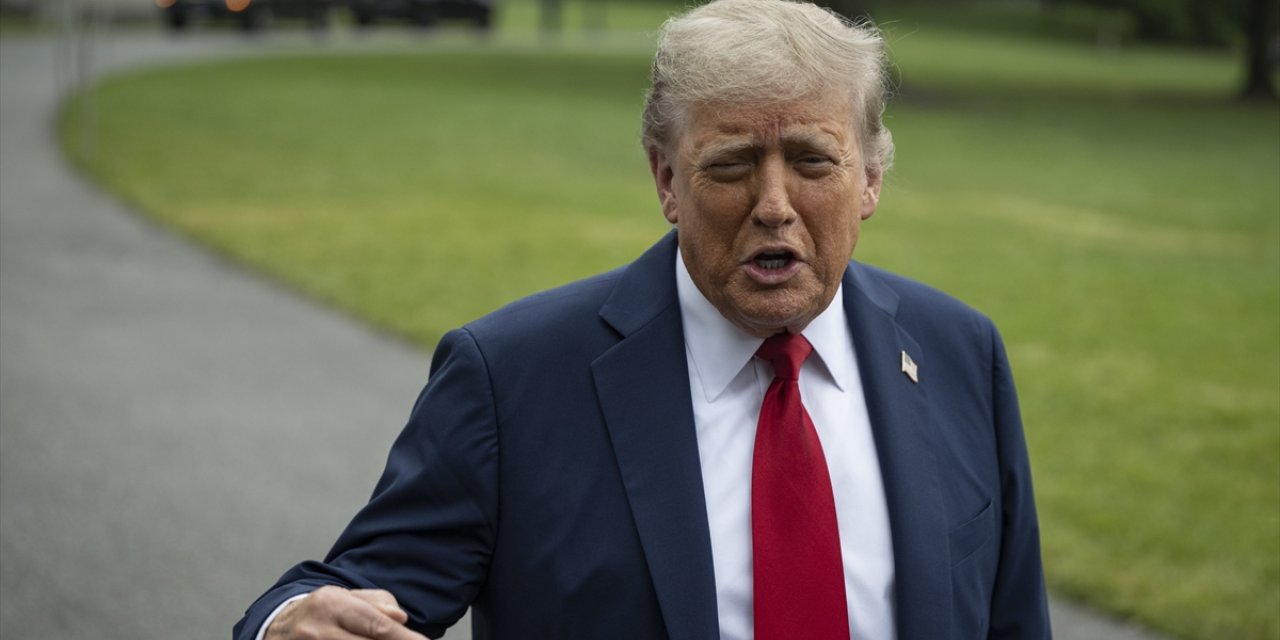
“A sword of Damocles is still hanging over European industry, over German industry, because the dependence is still there,” he told Anadolu. “China could reintroduce these measures any day. President (Donald) Trump could tweet something and then this deal breaks down and German industry would be captured. So, we’re very vulnerable.”
Gehrke said Europe has launched several initiatives in recent years to address its critical minerals dependency, yet they fall short of delivering near-term solutions. The EU’s Critical Raw Materials Act, he noted, sets out a broad range of necessary measures but lacks the financial resources required for implementation.
“The big problem is that there’s no money attached to it, so it’s a plan without money. That is the key issue, because you can’t get out of this dependency without spending money or without some sort of serious market intervention,” he said.
“China currently holds many advantages – technical expertise, lower prices, cheaper energy costs, and intellectual property.”
Under current conditions, Germany and Europe will remain dependent on China for critical minerals for years to come, Gehrke said. Beijing will likely use that dependency as a weapon again, having already demonstrated its effectiveness. He emphasized that Europe must combine its diversification plans with a strategy of economic deterrence.
“Yes, we have to focus on de-risking, but we also need a second leg to our strategy. If China threatens us again, we should be able to say don’t do it, because we have counter-weapons too,” he said. “If you only focus on de-risking, you will always be vulnerable to more coercion, so there needs to be a two-pronged strategy.”
Gehrke suggested that Europe must identify leverage points for potential export restrictions to China, citing specialized German machinery, certain chemical products and European aircraft components such as jet engines as possible tools for economic deterrence.
“I’m not saying we need to use them. The idea is to show we also have weapons – to demonstrate that and buy time to de-risk. To do that, Europeans need to build a strategy for economic deterrence and anti-coercion,” he explained.
Gehrke emphasized that EU countries must develop this strategy without delay and establish clear red lines, signaling to China that certain actions will not be tolerated.
Kaynak:
This news has been read 53 times in total





Türkçe karakter kullanılmayan ve büyük harflerle yazılmış yorumlar onaylanmamaktadır.