
EXPLAINER - Colombia, Mexico, Cuba: How they measure up to US military might
The three nations lag far behind the world’s most advanced military power, with major gaps in personnel, weapons, assets and budgets- Colombia’s military is structured for internal security, shaped by decades of conflict with guerrillas and drug cartels- Mexico focuses on counter-narcotics and border security, with the National Guard playing a growing role- Cuba relies on a massive paramilitary network of over 1 million personnel as the backbone of national defense
By Beril Canakci
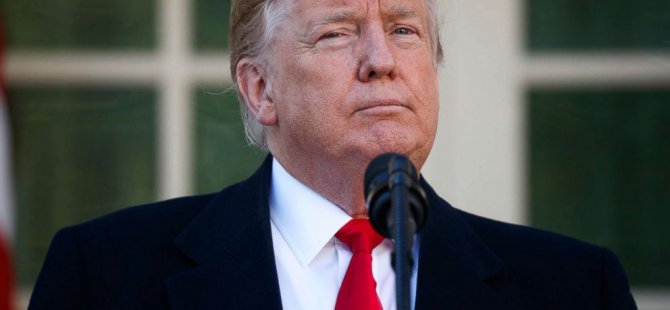
ISTANBUL (AA) – Three Latin American nations – Colombia, Mexico and Cuba – are bracing for potential confrontation with the US as President Donald Trump escalates threats across the hemisphere after Washington’s military intervention in Venezuela.
In the days since, Trump has maintained tense and shifting communications with Colombian President Gustavo Petro, one of the most outspoken critics of the operation.
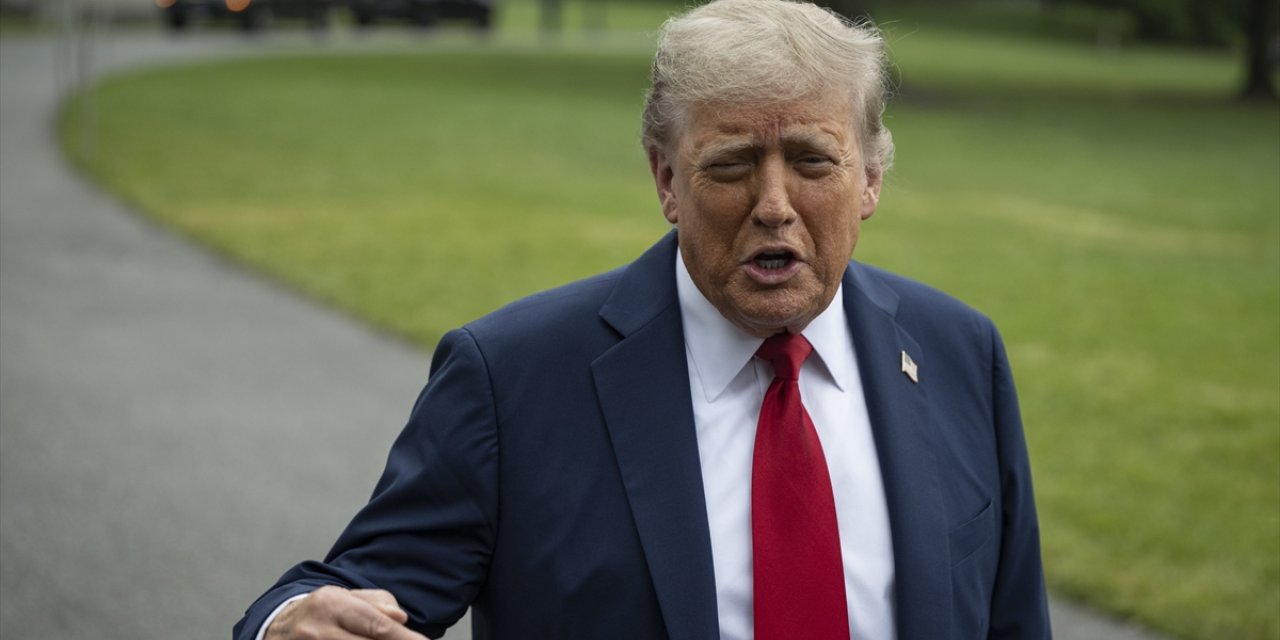
Calling Petro a “sick man” who “likes making cocaine and selling it to the United States,” Trump told reporters that a military intervention in Colombia “sounds good.”
After a phone call with the US president, Petro said the threat was “frozen” for now, adding: “I could be mistaken.”
Trump also targeted Mexico, which he said “is ruled by cartels,” accusing it of failing to curb migrant flows and drug trafficking to the US. He said the US is “going to start hitting land” in operations against cartel groups.
Cuba faced the starkest rhetoric, with Trump saying the island was “ready to fall” after losing Venezuelan oil subsidies, initially suggesting that no direct US action would be required.
“Make a deal, before it is too late,” he later posted on his social network Truth Social, adding that Venezuela will no longer provide Cuba with any oil or money.
In the US, these countries face the world’s most powerful and advanced military, one far ahead in terms of personnel, weapons and assets, and with a budget more than the combined spending of the next 10 largest military spenders.
Washington had a defense outlay of $895 billion last year and increased it to $901 billion for 2026. For 2027, Trump has called for bumping up the budget to a staggering $1.5 trillion.
- Colombia
Colombia fields a mid-tier military shaped by decades of internal conflict with guerrillas and drug cartels, leaving its forces focused largely on counterinsurgency and domestic security rather than external power projection.
The country ranks 46th out of 145 in the 2025 Global Firepower Index.
Colombia’s 2025 defense budget stands at about $15 billion, marking a real-terms increase of roughly 5.5% since 2022, according to official figures.
According to the International Institute for Strategic Studies (IISS), Colombia ranks among Latin America’s leading defense spenders, alongside Brazil.
However, in an interview with Spanish daily El Pais last week, Petro acknowledged that Colombia lacks air defense capabilities.
“We never bought them because the fight is internal,” he said. “Guerrillas don’t have F-16 aircraft … what we use here is popular defense.”
To modernize its air force, Colombia last year signed a deal with Swedish defense firm Saab for 17 Gripen fighter jets, which will replace its aging fleet of Israeli-made Kfir jets that have been in service for more than four decades.
Currently, Colombia has around 293,000 active personnel, supported by 436 military aircraft and a naval fleet of 233 vessels, including four submarines, according to Global Firepower data. Its inventory combines domestically produced systems with imports from suppliers including the US, Israel, Germany, Brazil and South Korea.
Colombia also continues to grapple with the legacy of paramilitary groups formed in the 1980s to combat left-wing insurgents. Many of these groups later evolved into organized crime networks. While a major demobilization effort in the mid-2000s disbanded tens of thousands of fighters, successor groups remain active, with their strength estimated at around 150,000.
- Mexico
Mexico’s defense posture is similarly focused on internal security, with the armed forces geared toward counter-narcotics operations, territorial control and border enforcement.
The country ranks 32nd out of 145 in the 2025 Global Firepower Index.
Mexico fields around 412,000 active personnel, supported by 433 military aircraft and 167 naval assets. Its military inventory combines domestically produced equipment with imports, mainly from the US, while the domestic defense industry produces light armored vehicles, naval vessels and small arms.
The role of the National Guard, a militarized force created in 2019 to combat organized crime, has expanded steadily, according to the IISS.
Mexico’s defense outlay has undergone a major shift over the past few years. In 2024, Mexican spending was at $16.7 billion, up by 39%, as it boosted funding to the National Guard and the navy, figures from the Stockholm International Peace Research Institute (SIPRI) showed.
However, the 2025 budget was slashed to about $7.6 billion as left-wing President Claudia Sheinbaum shifted priorities toward social spending.
Recently, the Mexican Air Force confirmed the acquisition of a Lockheed Martin C-130J Super Hercules, with delivery scheduled for November 2028, as part of efforts to renew its current fleet of three C-130 Hercules aircraft.
Some powerful drug cartels act as de facto paramilitary forces in the country, using military-grade weapons to control territory and trafficking routes. Mexico’s military and security forces regularly conduct law enforcement operations against them.
- Cuba
Cuba’s defense model is centered on a nationwide territorial defense system built around paramilitary mobilization, not a conventional expeditionary military.
The Revolutionary Armed Forces (FAR), the regular armed forces, are designed for asymmetric defense, deterrence, and prolonged resistance rather than offensive power projection. It has an estimated 45,500 active personnel, supported by about 31 military aircraft, 113 tanks and 19 naval vessels.
But Cuba’s most notable strength lies in its paramilitary force of roughly 1.14 million personnel – the third largest in the world after Bangladesh and India.
Ranked 67th globally in the 2025 Global Firepower Index, the Caribbean island has limited conventional military capabilities.
Fuel shortages and reliance on aging Russian and Soviet-era systems constrain readiness and operational reach.
Cuba has recently pursued limited modernization through military cooperation with Belarus, focusing on training and equipment upgrades.
According to media reports, Havana has worked with Belarusian firm ALEVKURP to modernize its S-125 Pechora air defense systems to the Pechora-2BM standard. First developed in the Soviet era, the system remains in service in several countries, including Venezuela.
With no verified official figures available, SIPRI estimated that the country spent about $2.9 billion on defense in 2018.
Kaynak:
This news has been read 141 times in total


Türkçe karakter kullanılmayan ve büyük harflerle yazılmış yorumlar onaylanmamaktadır.