
YEAR-ENDER - South Caucasus in 2026: What lies ahead for Armenia-Azerbaijan peace process
Opening of Armenia-Azerbaijan border could make regional market more open, competitive, says Eldaniz Gusseinov of the Heydar Aliyev Center for Eurasian Studies- If positive intentions under Baku-Yerevan peace agenda turn into concrete steps, 2026 could be a ‘historic’ year for South Caucasus, says regional expert Olesya Vartanyan- Prospects grow for expanded cooperation between Armenia and Türkiye, including travel and trade, Vartanyan adds
By Burc Eruygur and Elena Teslova
ISTANBUL / MOSCOW (AA) - The ongoing peace process between Armenia and Azerbaijan is navigating a fragile yet potentially transformative phase.
After Azerbaijan fully restored its control over the Karabakh region in 2023, Baku and Yerevan have taken steps toward ending a conflict between the two South Caucasus neighbors that has lasted for more than three decades.
Bilateral negotiations following the 44-day war in the fall of 2020, which ended with a Russia-mediated ceasefire, have expanded beyond ceasefire arrangements to include discussions on border delimitation, the unblocking of transport routes and the finalization of a formal peace treaty.
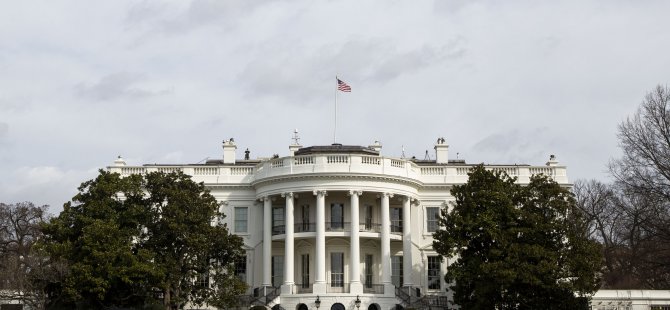
These efforts reached what many described as a historic moment when Azerbaijani President Ilham Aliyev and Armenian Prime Minister Nikol Pashinyan, with the mediation of US President Donald Trump, signed a joint declaration and initiated a 17-point peace agreement in Washington, DC, in August.
Since then, talks between Baku and Yerevan have continued, most recently through meetings of their border delimitation commissions in the Azerbaijani city of Gabala on Nov. 28.
Officials from both countries have also engaged publicly on peace-related issues, including in early December, when Azerbaijan’s Presidential Advisor Hikmet Hajiyev and Armenian Security Council Secretary Armen Grigoryan took part in a panel at the Doha Forum 2025, discussing the economic benefits of peace, trust-building measures and the road ahead.
The final ratification of the peace agreement by both sides would not only define bilateral relations, but could also reshape connectivity and security across the entire South Caucasus.
- Cooperation on energy, transport corridors
Eldaniz Gusseinov, a non-resident fellow at the Heydar Aliyev Center for Eurasian Studies at Ibn Haldun University, said final ratification of the peace agreement could transform the South Caucasus “from three separate states in one geographic space into a cohesive region.”
Speaking to Anadolu, Gusseinov identified this as one of three key trends likely to shape the region once the agreement is finalized.
Drawing a parallel with Central Asia, where border resolutions paved the way for cooperation on integrated transport and energy corridors, he said he expects a similar trajectory in the South Caucasus.
"The opening of borders in South Caucasus will create a need for expanded infrastructure, followed by harmonization of tariffs and customs procedures," Gusseinov said, adding that he anticipates the formalization of new regional formats.
Among them, he cited a trilateral framework involving Armenia, Azerbaijan and Georgia, as well as a broader “3+3” cooperation platform that would include other key regional actors.
Gusseinov also pointed to the growing strategic linkage between Central Asia and the South Caucasus, driven by the development of new transport corridors.
In this context, he said diplomatic progress between Armenia and Azerbaijan is making the region “an emerging stable and attractive area for Chinese investment,” noting growing interest from both China and the European Union in reliable overland trade routes.
He said this connectivity push will lead to the "deepening complexity of the region's geo-economic architecture."
The opening of the Armenia-Azerbaijan border, he added, could make the regional market “even more open, sparking competition.”
- 'More solidified and entrenched' peace
Olesya Vartanyan, a regional expert on conflicts and security, told Anadolu that the agreement between Baku and Yerevan is “extremely important” in reassuring both sides that fighting will not resume and in opening space for cooperation.
"The implementation of the transit project will be a major test for countries that have been in conflict for over 30 years. They still need to demonstrate that they are capable of setting aside their grievances and starting neighborly relations on a new page," she said.
Vartanyan noted that while transit is often discussed in geopolitical or economic terms, its significance also lies in demonstrating to Armenian and Azerbaijani societies that peace is possible and that cooperation can bring prosperity and development.
She added that such progress could give both societies “more freedom to make independent choices with regards to alliances and international partners.”
Looking ahead, Vartanyan expressed hope that 2026 could be the year when peace becomes “more solidified and entrenched” in the South Caucasus, stressing that this will depend on the implementation of transit agreements and the expansion of both bilateral and regional cooperation.
"A related development is the prospect of launching more direct cooperation between Armenia and Türkiye. They have already agreed on some arrangements for direct travel and bilateral trade," she said.
If implemented, she noted, these steps could help resolve decades of ambiguity in Turkish-Armenian relations and provide Armenia with direct access to Black Sea ports and wider regional transit infrastructure.
For Türkiye, she said, such progress would support the development of its eastern regions and strengthen its presence in the South Caucasus and Central Asia.
"Azerbaijan will also benefit, as such steps will strengthen the peace agenda and make it much more difficult to reverse the agreements signed at the White House,” Vartanyan said.
“If these positive intentions are turned into tangible actions, 2026 could become a historic year for the entire region," she added.
On the role of external actors, Vartanyan said their primary interest lies in maintaining a “more predictable” regional environment, with reduced risk of renewed conflict and expanded trade and transit opportunities.
"However, the process and the work itself remain primarily in the hands of these two countries – it is for them to decide how and when to proceed,” she added. “Outside actors can call for a sustained process, but they are not in a position to compel action, at least for now.”
Kaynak:
This news has been read 226 times in total




Türkçe karakter kullanılmayan ve büyük harflerle yazılmış yorumlar onaylanmamaktadır.